
The Everyday Ingredient That Deserves a Second Look
Most people do not think twice about the oils used in their food, especially when those oils are labeled as natural, plant-based, or heart-friendly. They are poured over salads, blended into smoothies, and used in cooking with the assumption that they are supporting health. This belief has been reinforced for decades through advertising, public health messaging, and even clinical recommendations, creating a sense of confidence that rarely gets questioned.
However, when we step back and observe the broader picture of modern health, something does not add up. The rise in chronic inflammation, metabolic disease, and fatigue has paralleled the increased use of these very oils. This does not mean seed oils are the only factor, but it does suggest they may be part of a larger puzzle that has been overlooked.
Functional medicine invites a different kind of thinking, one that does not accept surface-level answers but instead asks deeper questions about how everyday choices shape long-term health. When applied to seed oils, this approach reveals a story that is far more complex than the one most people have been told.
Understanding What You Are Really Eating
Seed oils are extracted from plants such as soybeans, corn, canola, sunflower, and safflower, yet their journey from seed to bottle is far from simple. Because seeds contain relatively small amounts of oil, manufacturers rely on industrial techniques involving heat and chemical solvents to extract and refine the fat. This process alters the oil’s structure, removes natural compounds, and creates a product designed for mass production and long shelf life.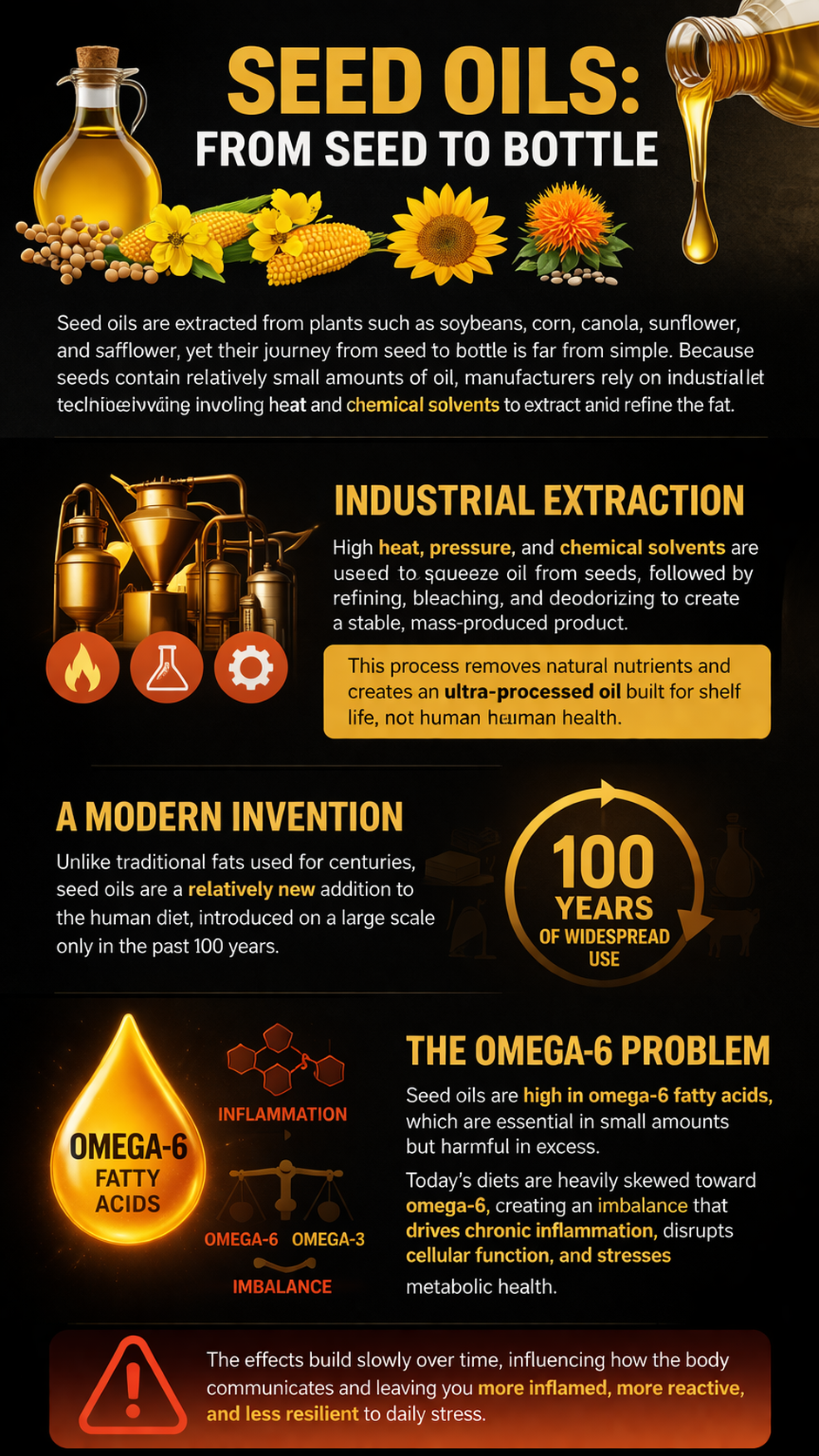
While this makes seed oils practical for the food industry, it raises important questions about how such heavily processed substances interact with the human body. Unlike traditional fats that have been consumed for generations, seed oils represent a relatively new addition to the human diet, introduced on a large scale only within the past century.
From a nutritional standpoint, these oils are high in omega-6 fatty acids, which are essential in small amounts but problematic when consumed in excess. The modern diet has shifted dramatically toward omega-6 dominance, creating an imbalance that influences inflammation, cellular signaling, and overall metabolic health.
This imbalance is not immediately obvious, which is why it often goes unnoticed for years. Instead of producing sudden symptoms, it slowly alters how the body communicates internally, making it more reactive, more inflamed, and less capable of maintaining balance under stress.
Why Balance Matters More Than Labels
The body relies on a delicate balance between omega-6 and omega-3 fatty acids to regulate inflammation. Omega-6 fats promote inflammatory responses when needed, while omega-3 fats help resolve them. In a balanced system, these processes work together to maintain stability and resilience.
In today’s environment, however, this balance has been disrupted. Seed oils have become a major source of omega-6 fats, while intake of omega-3-rich foods has often declined. This imbalance creates a situation where inflammatory signals are constantly being produced without adequate mechanisms to turn them off.
This does not typically result in immediate symptoms, which is why it often goes unnoticed. Instead, it creates a background state of low-grade inflammation that can affect multiple systems over time. Functional medicine recognizes this pattern as a key driver of chronic disease, even when conventional tests appear normal.
The Hidden Issue of Oil Stability
Another important factor to consider is how seed oils behave when exposed to heat. Polyunsaturated fats are chemically unstable and prone to oxidation, especially during cooking. When these oils are heated, they can form compounds that contribute to oxidative stress, which damages cells and interferes with normal biological function.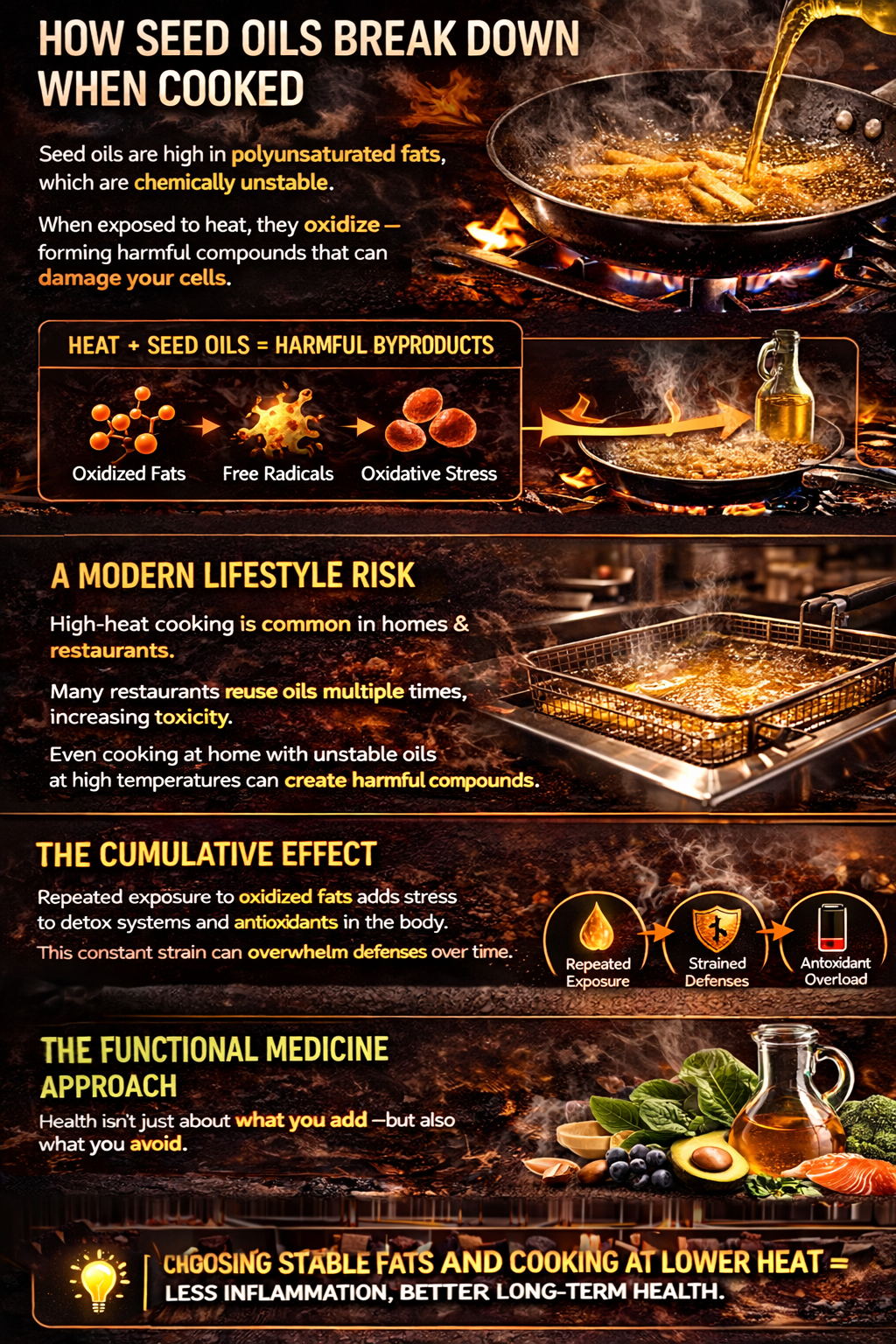
This is particularly relevant in modern lifestyles, where frying and high-heat cooking methods are common. Restaurants often reuse oils multiple times, increasing the concentration of these harmful byproducts. Even at home, using unstable oils for cooking can create conditions that challenge the body’s ability to maintain balance.
Over time, this repeated exposure adds up. The body must constantly deal with the byproducts of oxidized fats, placing additional strain on detoxification systems and antioxidant defenses, which can eventually become overwhelmed.
Functional medicine places strong emphasis on reducing oxidative stress as a way to support long-term health. This includes not only increasing antioxidant intake but also minimizing exposure to sources of oxidation, including unstable cooking oils.
Where Conventional Thinking Falls Short
The conventional approach to dietary fats has largely focused on reducing saturated fat and lowering cholesterol levels. While these goals were intended to improve heart health, they did not fully account for the complexity of how different fats behave within the body.
As a result, seed oils were widely promoted as healthier alternatives, often without considering their impact on inflammation and oxidation. This narrow focus has led to recommendations that may improve certain markers while overlooking broader physiological effects.
Functional medicine expands the conversation by looking at the body as an interconnected system. It asks not only how a food affects one marker but how it influences overall balance, energy production, and long-term resilience.
Practical Ways to Make Better Choices
The good news is that addressing this issue does not require drastic measures but rather a shift in awareness and daily habits. One of the most effective steps is to begin identifying where seed oils are present in your diet. Reading ingredient labels and recognizing common oil names allows you to make more informed decisions when selecting packaged foods.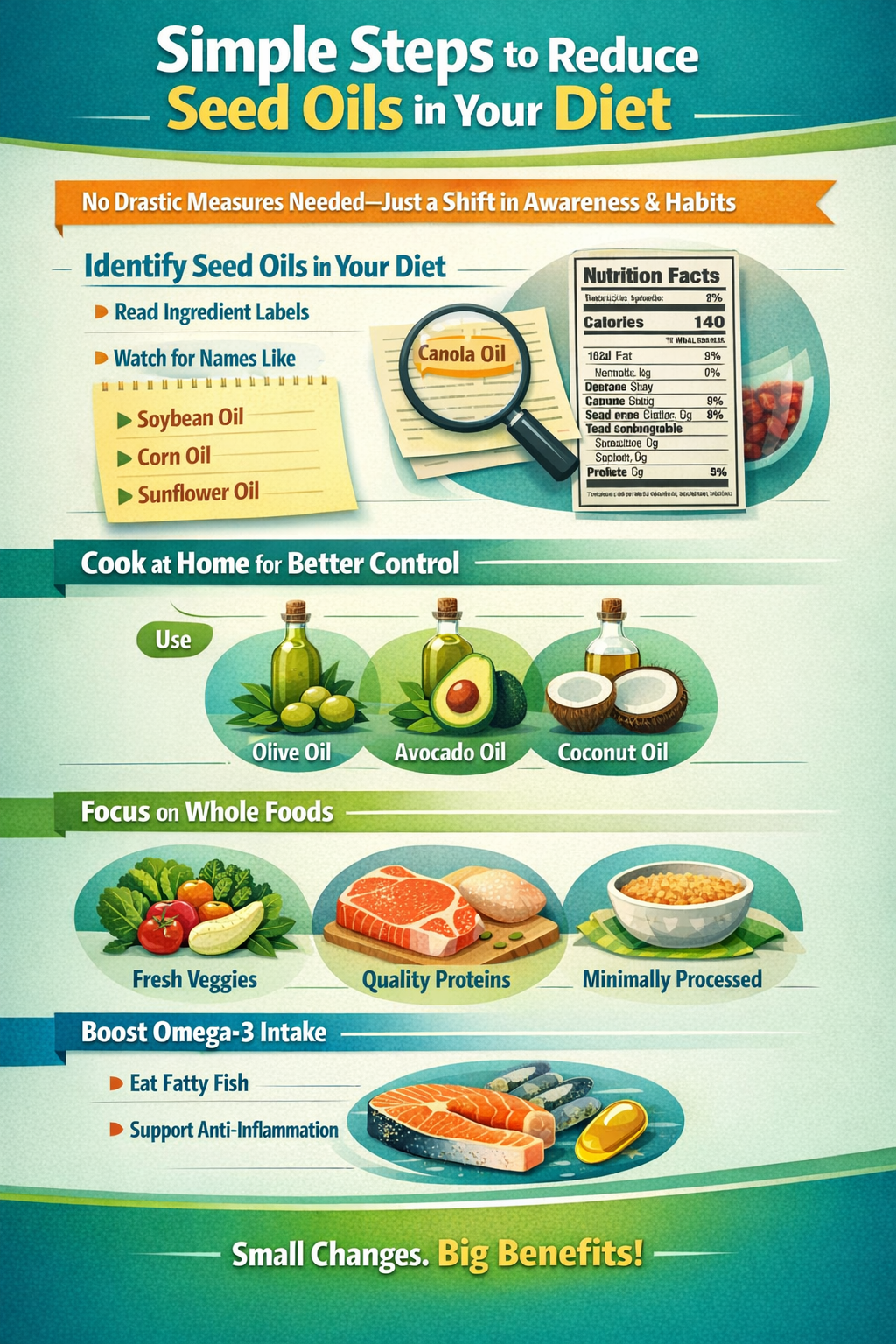
Cooking at home is another powerful strategy because it gives you control over the types of fats you use. Choosing more stable options such as olive oil, avocado oil, or coconut oil can help reduce exposure to oxidized compounds while supporting cellular health.
Focusing on whole foods simplifies the process even further. Fresh vegetables, quality proteins, and minimally processed ingredients naturally contain fewer hidden oils and provide nutrients that support balance. Including sources of omega-3 fats, such as fatty fish, helps restore a healthier ratio and supports anti-inflammatory pathways.
Applying This Knowledge to Daily Life
Making changes in your diet is not about perfection but about consistency. Small adjustments, such as switching cooking oils or choosing different snacks, can add up over time and create meaningful improvements in how the body functions.
It is also important to consider the broader lifestyle context. Sleep, stress management, and physical activity all influence how the body responds to dietary inputs. Supporting these areas enhances the effectiveness of nutritional changes and helps create a more resilient system overall.
Functional medicine emphasizes the importance of creating an environment in which the body can heal. This involves reducing harmful inputs while increasing supportive ones, allowing natural processes to restore balance.
A Different Way to Think About Health
The conversation around seed oils is not simply about avoiding a specific ingredient but about developing a deeper understanding of how food interacts with the body. It is about moving beyond marketing claims and embracing a more thoughtful approach to nutrition.
When you begin to see food as information that guides biological processes, your choices become more intentional. You are no longer just eating for convenience or taste but for function and long-term well-being.
This shift in perspective is empowering because it places control back in your hands. It allows you to make decisions based on knowledge rather than assumption, creating a path toward health that is both sustainable and grounded in understanding.
Conclusion: Small Shifts, Lasting Impact
Seed oils may seem like a minor detail in the context of an entire diet, yet their widespread presence and biological effects make them an important factor to consider. By becoming aware of how these oils are used and how they affect the body, you gain the ability to make choices that support rather than undermine your health.
The goal is not to create fear but to cultivate clarity. When you understand what your body needs and how different inputs influence its function, even small changes can lead to meaningful results. Over time, these changes build a foundation of health that supports energy, resilience, and long-term vitality.