
A deeper examination of what hypertension really is, why conventional approaches fall short, and how to restore balance through physiology, not suppression
In clinics across the country, blood pressure is measured in a matter of seconds, recorded in a chart, and often followed by a prescription. The process is so routine that few patients pause to question what the numbers actually represent. A reading of 140/90 is labeled “hypertension,” and from that moment forward, a person is frequently managed as though they have a chronic disease requiring lifelong pharmaceutical intervention. Yet this framing rests on an assumption that deserves far more scrutiny than it typically receives: that elevated blood pressure is itself the primary problem rather than a signal of deeper physiological imbalance.
To understand how to solve blood pressure naturally, one must first step outside the prevailing model and reconsider what blood pressure is. It is not a disease entity in the way an infection or structural injury is. It is a dynamic measurement, a reflection of how forcefully blood is being pushed through the vascular system at a given moment in time. That force is influenced by a wide range of variables, including the flexibility of blood vessels, the thickness of the blood itself, the signaling of the nervous system, the efficiency of the kidneys, and the biochemical environment within the body. When pressure rises, it is not doing so arbitrarily. It is doing so in response to conditions that demand compensation.
The conventional medical model, however, tends to interpret this compensation as malfunction. The question asked is not “What is the body responding to?” but rather “How can we bring the number down?” The distinction is not trivial. Lowering a number does not necessarily resolve the conditions that caused it to rise. In many cases, it obscures them.
The Historical Misunderstanding of Hypertension
The modern approach to blood pressure management emerged during a period when acute, life-threatening hypertension—often secondary to kidney disease or vascular damage—was far more common. In those cases, rapid intervention to reduce pressure was indeed necessary. Over time, however, the same interventionist mindset was extended to milder, chronic elevations in blood pressure, even when no immediate danger was present.
Large-scale population studies began to show correlations between higher blood pressure and cardiovascular events. These findings were interpreted as evidence that blood pressure itself was the cause of disease, rather than a marker associated with underlying processes such as inflammation, metabolic dysfunction, and vascular injury. From that point forward, treatment strategies focused on suppressing the measurement rather than addressing the terrain in which it arose.
This shift was reinforced by the development of antihypertensive medications, which proved effective at lowering numbers in the short term. What they did not do—and were never designed to do—was repair damaged endothelium, remove toxic burdens, restore autonomic balance, or correct nutritional deficiencies. Yet because the metric improved, the intervention was deemed successful.
Blood Pressure as a Compensatory Mechanism
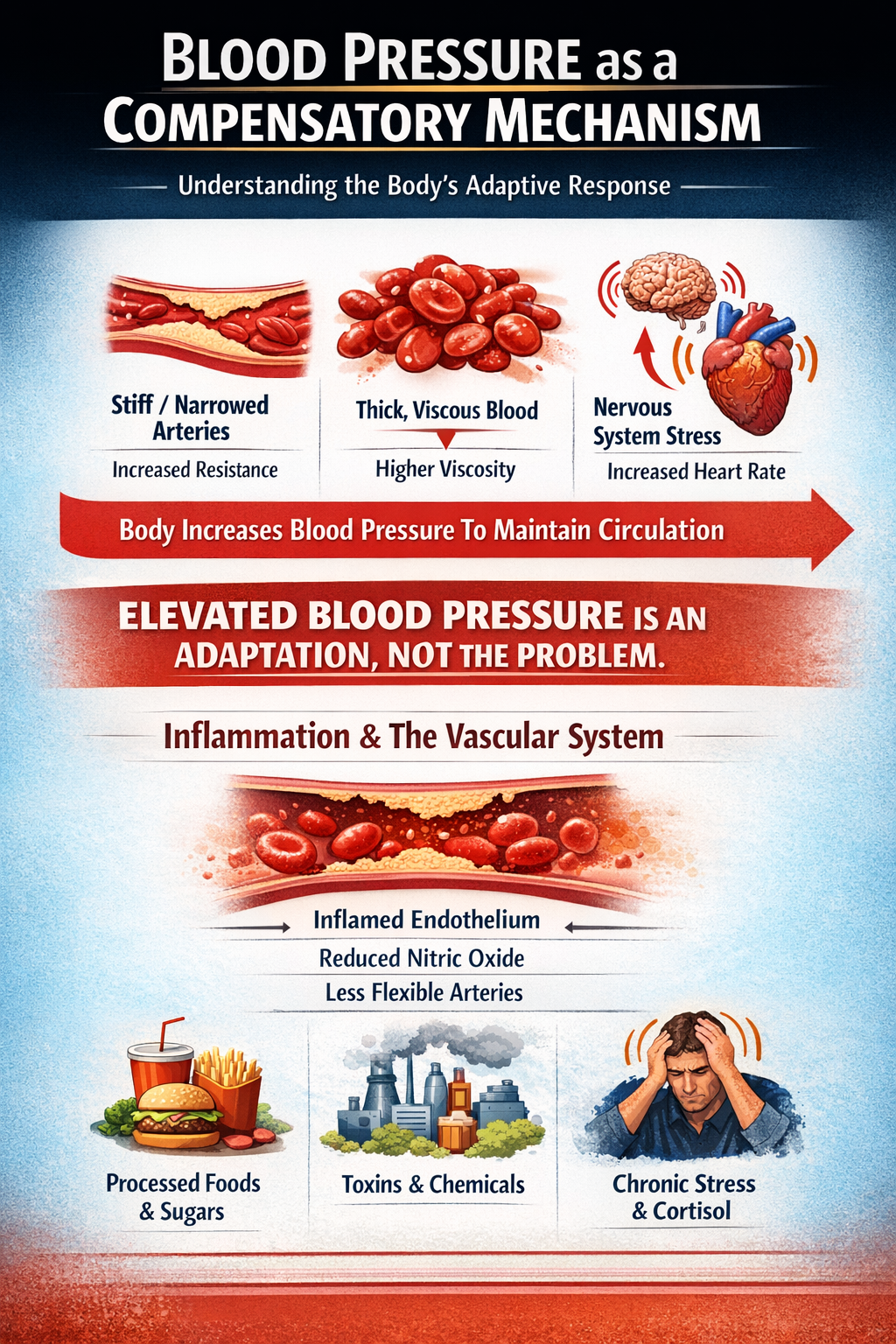
To understand why this approach is incomplete, it is helpful to consider the body’s priorities. Circulation is non-negotiable. Every cell depends on a steady supply of oxygen and nutrients, and the body will adjust pressure as needed to maintain that supply. If blood vessels become stiff or narrowed, pressure must increase to move blood through them. If the blood becomes thicker due to inflammation or metabolic dysfunction, more force is required to circulate it. If the nervous system is in a constant state of alert, signaling constriction and heightened cardiac output, pressure will rise accordingly.
In this context, elevated blood pressure is not the problem but the adaptation. The problem lies in what made the adaptation necessary.
Inflammation and the Vascular System
One of the most significant contributors to elevated blood pressure is chronic inflammation. The inner lining of blood vessels, known as the endothelium, plays a crucial role in regulating vascular tone. It produces nitric oxide, a molecule that allows vessels to relax and expand. When the endothelium is damaged by inflammatory processes, its ability to produce nitric oxide is impaired. The vessels become less flexible, more prone to constriction, and pressure increases as a result.
Inflammation is not a mysterious or inevitable process. It is driven by identifiable factors, many of which are embedded in modern lifestyles. Diets high in refined carbohydrates, industrial seed oils, and ultra-processed foods create a biochemical environment that promotes oxidative stress. Environmental toxins, ranging from heavy metals to endocrine-disrupting chemicals, further burden the system. Chronic psychological stress compounds the issue by elevating cortisol and other stress hormones that perpetuate inflammatory signaling.
Toxicity and the Burden on Detoxification Systems
The human body is equipped with sophisticated detoxification pathways, primarily centered in the liver, kidneys, and gastrointestinal tract. These systems are designed to process and eliminate harmful substances. However, the volume and variety of toxins encountered in contemporary environments often exceed the body’s capacity to manage them efficiently.
When toxins accumulate, they interfere with cellular function and contribute to oxidative stress. Blood vessels, which are in constant contact with circulating substances, are particularly vulnerable. Heavy metals such as lead and mercury have been shown to damage endothelial cells and disrupt vascular regulation. Pesticides and plastics can alter hormonal signaling, further complicating the body’s ability to maintain equilibrium.
In response to these stressors, the body may increase blood pressure as a means of maintaining adequate perfusion despite compromised vascular integrity. Suppressing that pressure without reducing the toxic burden does little to resolve the underlying issue.
The Nervous System: An Overlooked Regulator
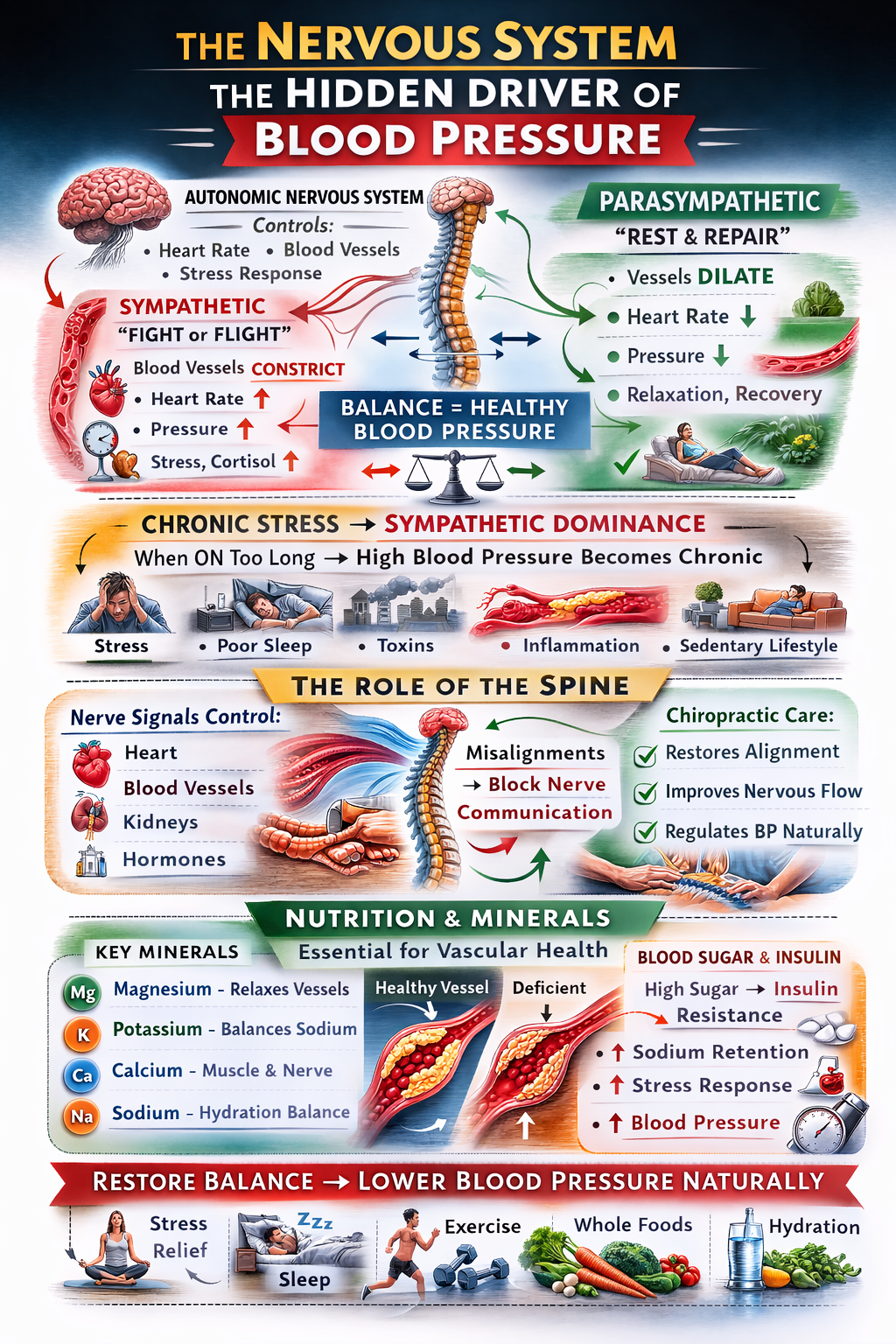
Perhaps the most underappreciated factor in blood pressure regulation is the autonomic nervous system. This system operates largely outside of conscious awareness, governing processes such as heart rate, digestion, and vascular tone. It consists of two primary branches: the sympathetic nervous system, which prepares the body for action, and the parasympathetic nervous system, which facilitates rest and repair.
In an ideal state, these branches function in balance, allowing the body to respond to challenges and then return to a baseline of calm. In reality, many individuals spend the majority of their time in a state of sympathetic dominance. Chronic stress, whether physical, emotional, or environmental, keeps the body in a heightened state of alert. Blood vessels constrict, heart rate increases, and blood pressure rises.
This pattern is not inherently pathological; it is adaptive in the short term. The problem arises when it becomes the default state rather than the exception. Over time, the body loses its ability to shift back into parasympathetic mode, and elevated blood pressure becomes chronic.
Structural Integrity and the Role of the Spine
The nervous system does not operate in isolation. It is housed within and protected by the spine, and its function is influenced by the structural alignment of that spine. Misalignments, particularly in the cervical and upper thoracic regions, can interfere with the transmission of nerve signals that regulate cardiovascular function.
Chiropractic care focuses on restoring proper alignment and mobility to the spine, thereby improving communication within the nervous system. When this communication is optimized, the body is better able to regulate processes such as vascular tone and heart rate. While chiropractic care is often associated with musculoskeletal complaints, its impact on systemic function, including blood pressure, is increasingly recognized.
Nutrition and the Biochemistry of Blood Pressure
The role of nutrition in blood pressure regulation extends beyond the simplistic advice to “eat less salt.” In fact, the relationship between sodium and blood pressure is far more nuanced than commonly portrayed. Sodium is an essential electrolyte, critical for nerve conduction, muscle function, and fluid balance. Problems arise not from sodium itself but from imbalances in the broader mineral matrix.
Magnesium, potassium, and calcium all play roles in vascular function. Magnesium, in particular, is involved in over 300 enzymatic reactions and has a direct relaxing effect on blood vessels. Deficiencies in these minerals are widespread, largely due to soil depletion and dietary patterns that favor processed foods over whole, nutrient-dense options.
Additionally, diets high in sugar and refined carbohydrates contribute to insulin resistance, which is closely linked to hypertension. Elevated insulin levels promote sodium retention and increase sympathetic nervous system activity, both of which can raise blood pressure.
A Functional Approach to Restoration
Addressing blood pressure naturally requires a shift in perspective. Rather than targeting the number, the focus must be on restoring the conditions that allow the body to regulate itself effectively. This involves reducing inflammation, supporting detoxification, balancing the nervous system, correcting structural issues, and optimizing nutrition.
Detoxification can be supported through strategies such as increasing hydration, consuming fiber-rich foods that bind toxins in the gut, and incorporating nutrients that support liver function, such as glutathione precursors. Sweating, whether through exercise or sauna use, provides an additional pathway for toxin elimination.
Nutritional interventions should emphasize whole, unprocessed foods, with adequate intake of healthy fats, clean proteins, and mineral-rich vegetables. Eliminating inflammatory triggers such as refined sugars and industrial oils is essential. Intermittent fasting can also play a role by improving insulin sensitivity and reducing metabolic stress.
Stress management is not a peripheral concern but a central component of blood pressure regulation. Practices that activate the parasympathetic nervous system, such as deep breathing, meditation, and time spent in nature, can have measurable effects on vascular tone.
Chiropractic care, by addressing structural and neurological factors, complements these interventions and helps restore the body’s innate ability to regulate itself.
The AskDrErnst 7-Day Protocol to Reset Blood Pressure Naturally
What follows is a structured, intensive seven-day plan designed to begin reversing the underlying drivers of elevated blood pressure. While meaningful change often requires longer-term commitment, this protocol provides a focused starting point.
Day 1: Remove the Inputs
Begin by eliminating the most common dietary and environmental stressors. Remove processed foods, refined sugars, seed oils, alcohol, and caffeine. Transition to whole foods, emphasizing clean proteins, healthy fats, and non-starchy vegetables. Increase water intake to at least half your body weight in ounces.
Day 2: Hydrate and Mineralize
Continue clean eating while focusing on hydration and mineral balance. Add a high-quality mineral source, ensuring adequate intake of magnesium and potassium. Consider incorporating bone broth or mineral-rich broths to support electrolyte balance.
Day 3: Activate Detox Pathways
Introduce gentle detoxification strategies. Increase fiber intake through vegetables and supplemental sources if needed. Engage in light sweating through exercise or sauna use. Support liver function with foods such as cruciferous vegetables and herbs like milk thistle.
Day 4: Reset the Nervous System
Dedicate time to practices that shift the body into parasympathetic mode. This may include diaphragmatic breathing, meditation, or quiet time away from digital stimulation. Aim for at least 20–30 minutes of intentional relaxation.
Day 5: Address Structural Alignment
Seek chiropractic evaluation and adjustment to restore proper spinal alignment. This step is critical for optimizing nervous system communication and supporting cardiovascular regulation.
Day 6: Stabilize Blood Sugar
Focus on balanced meals that prevent spikes in blood sugar. Combine proteins, fats, and fiber at each meal. Avoid snacking and allow periods of fasting between meals to improve insulin sensitivity.
Day 7: Integrate and Reflect
Assess how your body has responded over the week. Continue the practices that produced noticeable improvements and identify areas for further refinement. Recognize that this is not a temporary intervention but the beginning of a sustained approach to health.
Conclusion: Restoring Control Through Understanding
Blood pressure is not an arbitrary number to be managed indefinitely. It is a reflection of how well—or how poorly—the body is functioning as an integrated system. When that system is supported through thoughtful, targeted interventions, it often regains its ability to regulate itself.
The path to normalizing blood pressure naturally is not found in suppressing symptoms but in understanding and addressing their causes. It requires a willingness to question established assumptions and to engage with the body as a dynamic, adaptive organism.
For those who take that path, the reward is not merely a lower number on a chart but a deeper level of health that extends far beyond it.