
Epstein–Barr virus (EBV) is one of the most widespread infectious agents affecting humanity. Epidemiological studies estimate that more than ninety percent of adults worldwide carry this virus. For many individuals the infection occurs in childhood and passes almost unnoticed. In other cases it manifests during adolescence or early adulthood as the condition known as Infectious Mononucleosis, an illness characterized by profound fatigue, swollen lymph nodes, fever, and sore throat. Although the acute illness typically resolves, the biological story of EBV rarely ends there. Unlike viruses that infect the body and are cleared by the immune system, EBV belongs to the herpesvirus family, meaning that once infection occurs the virus establishes a lifelong presence within the host.
The long-term persistence of EBV has become a subject of increasing interest among researchers because the virus has been linked to a remarkable range of chronic diseases. Over the past several decades, studies in immunology, neurology, oncology, and autoimmune research have revealed associations between EBV and conditions ranging from chronic fatigue syndromes to multiple sclerosis and certain cancers. These discoveries have prompted scientists to reconsider the possibility that many chronic illnesses traditionally attributed to genetics or lifestyle may also involve hidden viral influences that interact with immune regulation, inflammation, and cellular metabolism.
To understand why EBV is capable of exerting such widespread effects, it is necessary to explore how the virus infects the body, how it persists within immune cells, and how its reactivation can influence multiple physiological systems. Examining these mechanisms also provides insight into why some individuals remain relatively unaffected after infection while others experience long-lasting health consequences. A deeper understanding of EBV biology offers a framework for exploring strategies that support immune function and reduce viral activity, thereby allowing the body’s natural healing systems to regain equilibrium.
The Discovery and Biology of Epstein–Barr Virus
The virus that would eventually become known as Epstein–Barr virus was first identified in 1964 by the scientists Michael Anthony Epstein and Yvonne Barr. Their discovery occurred while studying tumor cells from children suffering from Burkitt Lymphoma, a rare but aggressive cancer observed in certain regions of Africa. Within the tumor cells they detected viral particles that had not previously been described. This observation ultimately led to the recognition that EBV was not merely a benign infection but a virus capable of influencing cellular behavior in profound ways.
Epstein–Barr virus is classified as a double-stranded DNA virus within the herpesvirus family. This group includes other well-known pathogens such as Herpes Simplex Virus, Varicella, and Cytomegalovirus. A defining characteristic shared by all herpesviruses is their ability to establish latency within the host. Instead of being completely eradicated by the immune system after the initial infection, these viruses enter a dormant phase in which they remain inside host cells with minimal gene expression. During this period they may remain clinically silent for years, only to reactivate when immune surveillance weakens or physiological stressors disrupt immune balance.
EBV displays a particular affinity for B lymphocytes, the immune cells responsible for producing antibodies. When the virus enters the body—most commonly through saliva—it infects epithelial cells in the throat and subsequently spreads to B cells. Once inside these immune cells the viral genome integrates into the cellular machinery, enabling the virus to manipulate the behavior of the infected cell. In some instances EBV causes B cells to proliferate more rapidly, which explains why the virus has been implicated in certain lymphomas and immune-related disorders.
The life cycle of EBV alternates between two phases. The first phase is the lytic cycle, during which the virus actively replicates and produces new viral particles capable of infecting additional cells. This phase is associated with the symptoms of acute infection. The second phase is the latent cycle, during which the viral genome persists quietly inside the host cell while producing only a small set of proteins required for maintaining latency. This latent phase is the key to EBV’s persistence. Because the virus expresses so few proteins during latency, the immune system has difficulty detecting the infected cells. As a result, EBV can remain hidden within the body indefinitely.
Acute Epstein–Barr Infection and Mononucleosis

When EBV infection occurs during adolescence or adulthood, it frequently produces the illness known as Infectious Mononucleosis. The condition typically begins with symptoms that resemble influenza: fever, sore throat, headaches, muscle aches, and extreme fatigue. Within several days lymph nodes in the neck often become enlarged and tender, reflecting the intense immune response that occurs as the body attempts to control viral replication. In some individuals the spleen and liver also become enlarged, indicating that the immune system is working vigorously to filter infected cells from the bloodstream.
The hallmark symptom of mononucleosis is fatigue. Many patients describe a profound exhaustion that is disproportionate to the apparent severity of the illness. Even after the fever and sore throat resolve, the fatigue may persist for weeks or months. In most individuals energy levels gradually return to normal as the immune system suppresses the active viral infection and the virus transitions into its latent state within B cells.
However, not all patients recover fully. A significant subset reports lingering symptoms such as persistent fatigue, cognitive fog, muscle pain, and difficulty tolerating physical exertion. These symptoms resemble those seen in Chronic Fatigue Syndrome, a complex disorder that has been linked to immune dysfunction and chronic viral activation. Research has shown that some individuals who develop chronic fatigue syndrome experienced severe mononucleosis in the months preceding the onset of their symptoms, suggesting that EBV may play a role in initiating long-term immune disturbances.
Chronic Active Epstein–Barr Virus
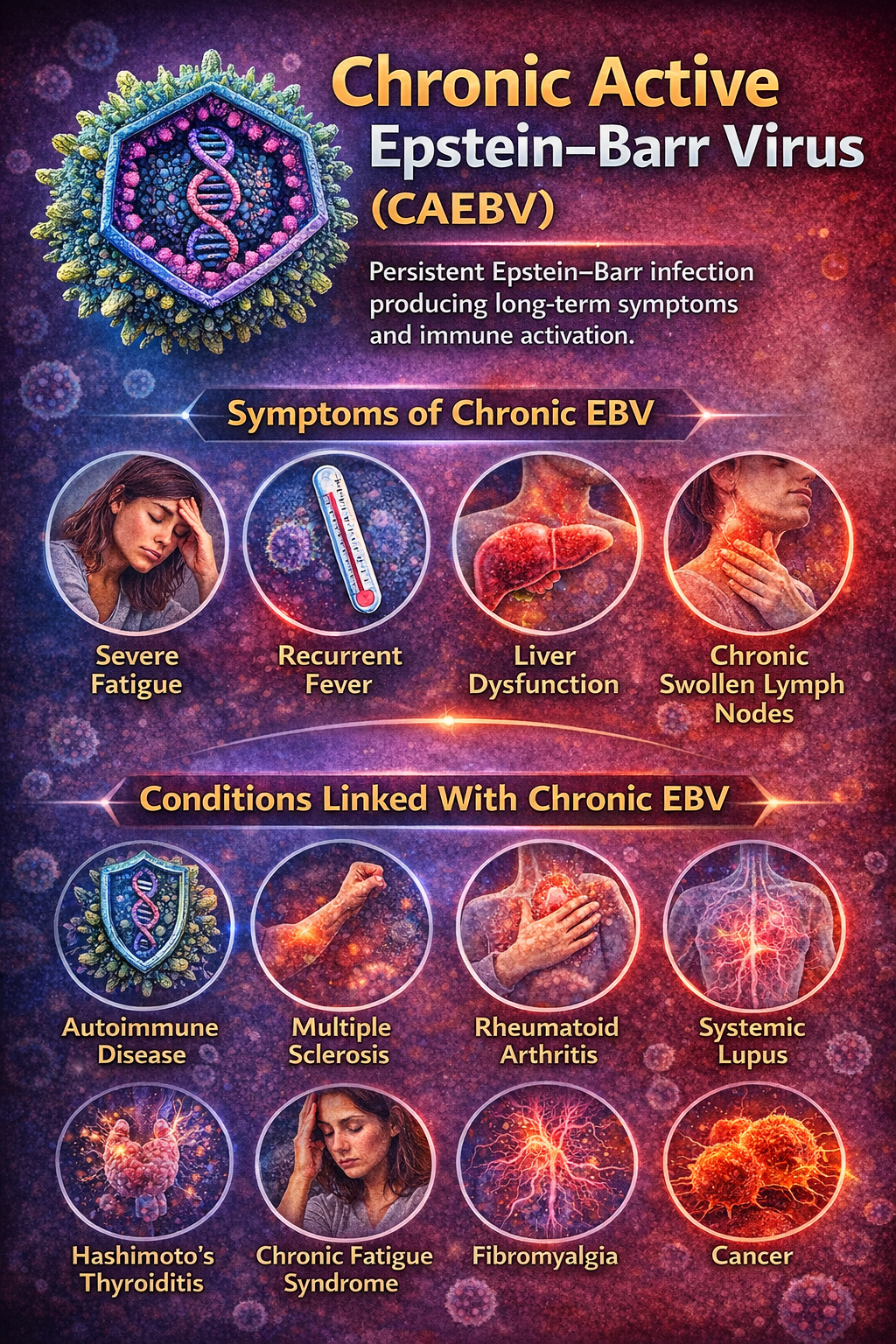
Commonly EBV does not remain dormant after the acute infection subsides. Instead, the virus continues to replicate at low levels within the body, producing a condition known as Chronic Active Epstein-Barr Virus. Patients with this disorder often experience recurrent fever, persistent fatigue, liver dysfunction, and enlargement of the spleen and lymph nodes. Laboratory tests may reveal unusually high levels of EBV antibodies or viral DNA circulating in the blood, indicating ongoing viral activity.
Although chronic active EBV is medically considered rare, it’s quite often present in most chronic illness cases. This illustrates the capacity of the virus to disrupt immune regulation when viral replication is not adequately controlled. In severe cases the condition can progress to immune system failure or EBV-associated lymphomas. The existence of this disorder has led researchers to consider whether milder forms of persistent EBV reactivation may contribute to other chronic diseases that are not traditionally classified as viral infections.
Epstein–Barr Virus and Autoimmune Disease
Autoimmune diseases arise when the immune system mistakenly attacks the body’s own tissues. For many years the causes of autoimmune disorders were attributed primarily to genetic susceptibility and environmental triggers. Increasingly, however, researchers have begun to examine whether persistent viral infections may also contribute to the development of these conditions. Epstein–Barr virus has emerged as one of the most compelling candidates because of its ability to infect immune cells and influence the production of antibodies.
One mechanism by which EBV may contribute to autoimmune disease is known as molecular mimicry. Viral proteins sometimes resemble proteins found in human tissues. When the immune system produces antibodies against the virus, those antibodies may also bind to similar structures in the body’s own cells. This cross-reactivity can lead to chronic inflammation and tissue damage.
Among the autoimmune conditions most strongly associated with EBV is Multiple Sclerosis. Multiple sclerosis involves immune-mediated destruction of the myelin sheath that insulates nerve fibers in the brain and spinal cord. A large epidemiological study involving more than ten million individuals found that infection with EBV increased the risk of developing multiple sclerosis by more than thirty times. Investigators observed that antibodies targeting EBV proteins frequently cross-reacted with proteins found in the central nervous system, providing a plausible explanation for how viral infection could trigger autoimmune neurological damage.
Another autoimmune disorder linked to EBV is Rheumatoid Arthritis. Patients with rheumatoid arthritis often show elevated levels of EBV antibodies compared with healthy individuals, suggesting increased viral activity or immune recognition of the virus. Researchers have detected EBV genetic material in the synovial tissue that lines affected joints, raising the possibility that viral infection of immune cells within the joint may contribute to chronic inflammation and tissue destruction.
EBV has also been implicated in Systemic Lupus Erythematosus, a disorder in which the immune system attacks multiple organs including the skin, kidneys, joints, and nervous system. Studies have shown that individuals with lupus often produce antibodies that react both to EBV proteins and to nuclear proteins within human cells. This observation supports the hypothesis that viral infection may initiate immune responses that later become directed against the body’s own tissues.
The thyroid gland may also be vulnerable to autoimmune responses triggered by EBV infection. Hashimoto’s Thyroiditis, the most common cause of hypothyroidism in many countries, has been associated with evidence of EBV infection within thyroid tissue. Viral proteins may stimulate immune responses that gradually damage the thyroid gland, eventually impairing its ability to produce adequate thyroid hormones.
Neurological and Fatigue-Related Conditions Linked to EBV
The nervous system is particularly sensitive to inflammation, and persistent viral infections have long been suspected of contributing to neurological disorders. EBV is capable of influencing the nervous system indirectly through immune activation and inflammatory signaling. When infected immune cells migrate into the central nervous system they can trigger inflammatory cascades that disrupt neuronal function.
One of the conditions frequently discussed in this context is Chronic Fatigue Syndrome. Patients with this illness often report that their symptoms began after a severe viral infection, with EBV being among the most common triggers. Researchers have documented abnormalities in immune signaling, mitochondrial function, and neuroinflammation among individuals with chronic fatigue syndrome. Although the precise role of EBV remains under investigation, persistent immune responses to the virus may contribute to the debilitating fatigue and cognitive impairment characteristic of the disorder.
Another condition sometimes associated with EBV is Fibromyalgia, which involves widespread musculoskeletal pain accompanied by fatigue and sleep disturbances. Some researchers have proposed that viral infections may sensitize pain pathways within the nervous system, potentially contributing to the development of fibromyalgia in susceptible individuals.
In rare cases EBV infection has also been linked to neurological complications such as Guillain-Barre Syndrome and Transverse Myelitis, conditions in which immune-mediated inflammation damages peripheral nerves or the spinal cord. Although these complications are uncommon, they demonstrate the capacity of viral infections to influence neurological health through immune mechanisms.
Epstein–Barr Virus and Cancer
One of the most striking aspects of EBV biology is its connection to certain cancers. The World Health Organization classifies Epstein–Barr virus as a Group 1 carcinogen because substantial evidence demonstrates its role in several malignancies. The virus possesses the ability to manipulate cellular gene expression and promote the survival and proliferation of infected cells, mechanisms that can contribute to cancer development when combined with genetic mutations or immune suppression.
The cancer most famously associated with EBV is Burkitt Lymphoma, an aggressive lymphoma that arises from B lymphocytes. In regions where the disease is common, nearly all tumor cells contain EBV DNA. Viral proteins expressed within infected cells activate pathways that stimulate cell division while preventing normal mechanisms of cell death, allowing malignant cells to accumulate.
Another malignancy linked to EBV is Hodgkin Lymphoma. In a significant proportion of cases, tumor cells contain EBV genetic material. These cells often exhibit abnormal immune signaling pathways that may have been influenced by viral proteins.
EBV is also strongly associated with Nasopharyngeal Carcinoma, a cancer that occurs in the upper part of the throat behind the nose. In this disease the virus infects epithelial cells and alters gene expression in ways that promote tumor formation. Genetic susceptibility and environmental factors such as dietary nitrosamines appear to interact with viral infection to increase cancer risk.
Additionally, a subset of Gastric Cancer cases has been linked to EBV infection. Tumors associated with EBV often exhibit distinctive genetic patterns indicating that the virus has influenced the regulation of cellular growth pathways.
Supporting the Body’s Ability to Suppress EBV

Although EBV cannot easily be eradicated once it establishes latency, the immune system is capable of keeping the virus suppressed when immune regulation, nutrient status, and metabolic health are optimal. Strategies aimed at strengthening immune defenses, reducing inflammation, and supporting cellular repair may therefore help reduce viral reactivation and improve overall health.
Nutritional Foundations
A diet rich in unprocessed whole foods provides essential vitamins, minerals, and phytonutrients that support immune function. Foods containing antioxidants such as vitamin C, polyphenols, and carotenoids help neutralize oxidative stress generated during viral infections. Sources include leafy greens, cruciferous vegetables, berries, citrus fruits, and herbs such as turmeric and ginger. Adequate protein intake supports the production of antibodies and immune cells, while healthy fats from sources such as olive oil and wild fish contribute to anti-inflammatory signaling pathways.
Key Nutrients with Antiviral Activity
Certain nutrients have demonstrated antiviral properties in laboratory studies. Vitamin C supports immune cell activity and enhances the production of interferons, signaling molecules that help cells resist viral replication. Zinc plays an important role in immune signaling and has been shown to interfere with viral replication in several viruses. Selenium contributes to antioxidant defense systems and appears to enhance the immune response against viral infections. Vitamin D regulates immune balance and helps prevent excessive inflammatory responses that can damage tissues during chronic infections.
Botanical Compounds
A number of plant-derived compounds have been studied for antiviral effects. Extracts from olive leaves contain oleuropein, a compound with activity against several viruses including members of the herpesvirus family. Licorice root contains glycyrrhizin, which has demonstrated inhibitory effects on viral replication in laboratory experiments. Monolaurin, a compound derived from coconut oil, can disrupt lipid membranes surrounding certain viruses. Cat’s claw has been investigated for its immune-modulating properties and its potential to support the body’s response to chronic infections.
Lifestyle Factors
Sleep, stress management, and regular physical activity all influence immune function. Chronic stress elevates cortisol, a hormone that suppresses immune responses and may permit viral reactivation. Adequate sleep supports the production of immune signaling molecules and improves the body’s ability to control infections. Moderate physical activity enhances circulation and immune surveillance, while excessive overtraining may temporarily weaken immune defenses.
Gut Health and Immune Regulation
The intestinal microbiome plays a central role in immune regulation. A diverse community of beneficial microorganisms helps train the immune system to respond appropriately to pathogens without producing excessive inflammation. Diets rich in fiber, fermented foods, and polyphenols support microbial diversity and may indirectly enhance the body’s ability to manage chronic viral infections.
Conclusion
Epstein–Barr virus represents one of the most pervasive infections affecting humans, yet its full impact on long-term health is still being explored. Research over the past several decades has revealed connections between EBV and a wide array of diseases including autoimmune disorders, neurological conditions, and certain cancers. These associations do not imply that EBV is the sole cause of these illnesses, but they highlight the possibility that persistent viral infections may contribute to complex chronic disease processes in ways that have only recently begun to be understood.
Understanding the biology of EBV encourages a broader perspective on health that recognizes the interplay between infection, immune regulation, nutrition, and lifestyle factors. While the virus may remain within the body for life, maintaining a strong and balanced immune system can help keep viral activity suppressed and reduce the likelihood of chronic complications. As scientific research continues to unravel the intricate relationship between viruses and human health, strategies that support immune resilience and cellular health will likely become increasingly important in promoting long-term wellbeing.